💡 Abstract
This article reviews 10 Claude alternatives for creative writing: HIX AI Writer Agent, Sudowrite, ChatGPT, Novelcrafter, Google Gemini, ProWritingAid, NovelAI, Squibler, Type AI, and Rytr. It highlights each tool’s strengths, limitations, and core creative role—from scene expansion and plot exploration to multimodal inspiration, manuscript editing, and long-form planning—helping writers quickly choose the best fit for their workflow.
Claude is known for fluent, nuanced prose, but its content safeguards and usage limitations may not suit every creative workflow. For writers looking for a Claude alternative for creative writing, these constraints can interrupt momentum when developing scenes, plot ideas, or descriptive passages.
To find the right storytelling companion, I evaluated a range of popular AI writing tools and selected 10 strong options for creative writers.Keep reading to find the creative writing assistant that best suits your needs.
10 Best Claude Alternatives for Creative Writing
- HIX AI: All-in-One Creative Writing Assistant
- Sudowrite: Scene Expansion and Sensory Detail
- ChatGPT: Conversational Idea and Plot Explorer
- Novelcrafter: Customizable Long-Form Fiction Workspace
- Google Gemini: Multimodal Inspiration for Story Development
- ProWritingAid: Manuscript Analysis and Prose Editing
- NovelAI: Narrative Style and Lorebook Experimentation
- Squibler: Outline-Led Manuscript Development
- Type AI: In-Document Draft Revision
- Rytr: Quick Short-Form Drafting and Rewriting
Claude Alternatives: A Quick Comparison
| Tool | Writing Needs It Can Support |
| HIX AI | Creative brainstorming, story drafting, dialogue rewriting, essay and prose generation, book-length content, multimodal inspiration, and conversational revision |
| Sudowrite | Scene expansion, sensory description, fiction rewriting, story continuation, plot development, and novel planning |
| ChatGPT | Premise development, character brainstorming, plot exploration, dialogue generation, worldbuilding, and creative idea discussions |
| Novelcrafter | Long-form fiction planning, worldbuilding management, character tracking, custom AI workflows, and series organization |
| Google Gemini | Text-and-image inspiration, visual concept development, character and setting ideas, research-assisted ideation, and scene rewriting |
| ProWritingAid | Grammar review, style editing, readability improvement, pacing analysis, repetition checks, and manuscript critique |
| NovelAI | Fiction generation, prose-style experimentation, scene continuation, worldbuilding references, and genre-focused writing |
| Squibler | Story outlining, chapter planning, manuscript organization, scene development, book drafting, and screenplay creation |
| Type AI | Long-form document editing, manuscript revision, in-context rewriting, story-note management, and draft refinement |
| Rytr | Quick idea generation, short-form drafting, text continuation, paragraph expansion, rephrasing, and tone adjustment |
HIX AI: All-in-One Creative Writing Assistant
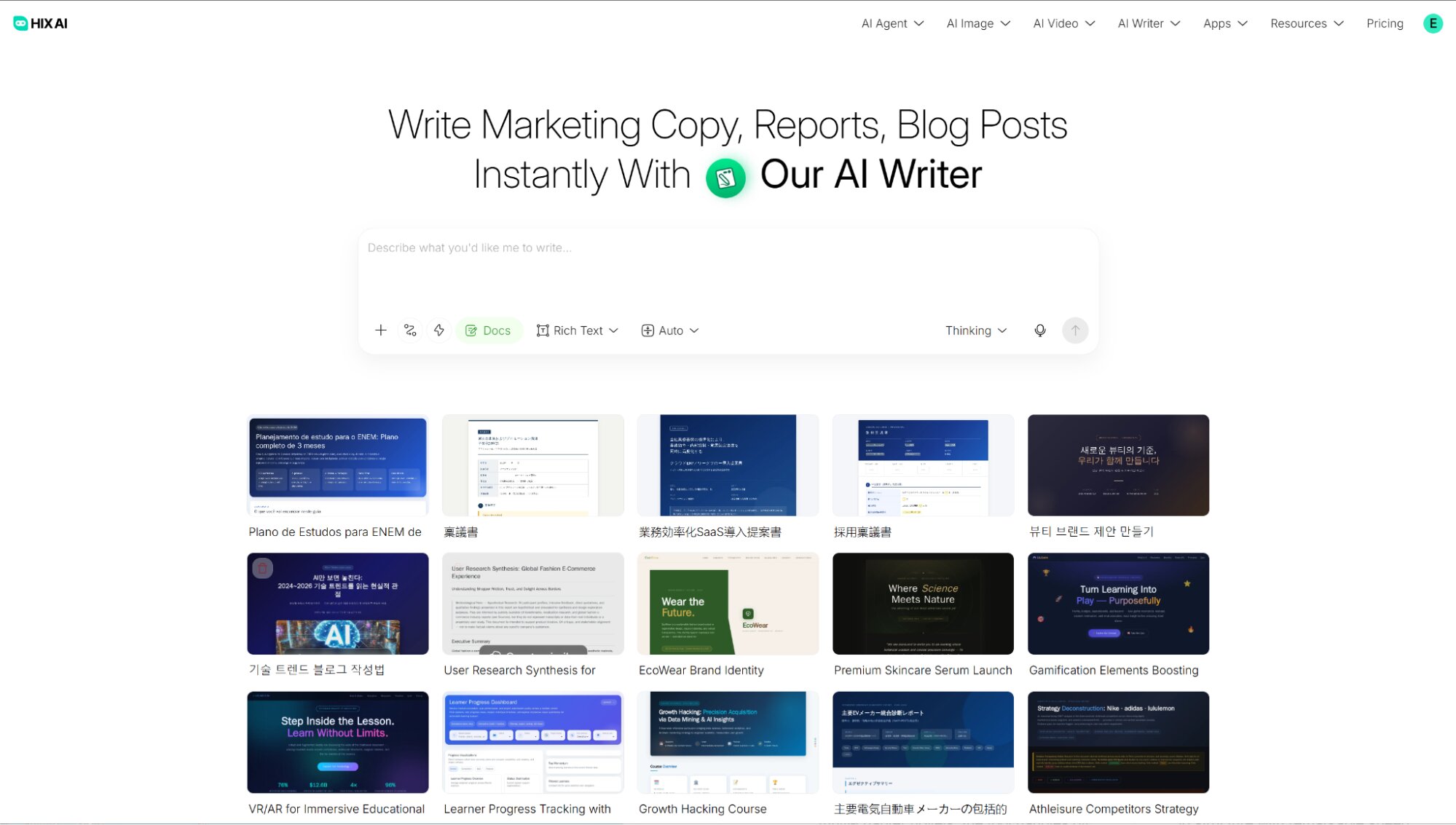
In our hands-on testing, HIX AI writer agent emerges as the premier Claude alternative for creative writing. It covers the full editorial lifecycle—from initial outlining and long-form drafting to line-level polishing and custom formatting. Whether generating punchy poems or architecting multi-chapter novels, the tool handles diverse scale and structure with remarkable speed.
The agent's standout strength lies in its conversational co-pilot functionality. Writers can iterate on character arcs, tweak plot points, and restructure endings simply by chatting with the agent. It executes real-time revisions across the draft while maintaining strict narrative continuity, tone, and contextual logic.
Moving beyond standard text generation, the writer agent integrates intelligent design capabilities. By producing high-quality imagery directly attuned to the narrative, it provides a seamless visual layer that turns text-heavy stories and poems into rich, multimodal works.
Pros
- Clear logical structure
- Coherent content flow
- Good consistency
- Support for diverse writing genres
- Useful for revision and expansion
Cons
- Limited free usage allowance
- Cannot replace human artistic judgment
Sudowrite: Scene Expansion and Sensory Detail
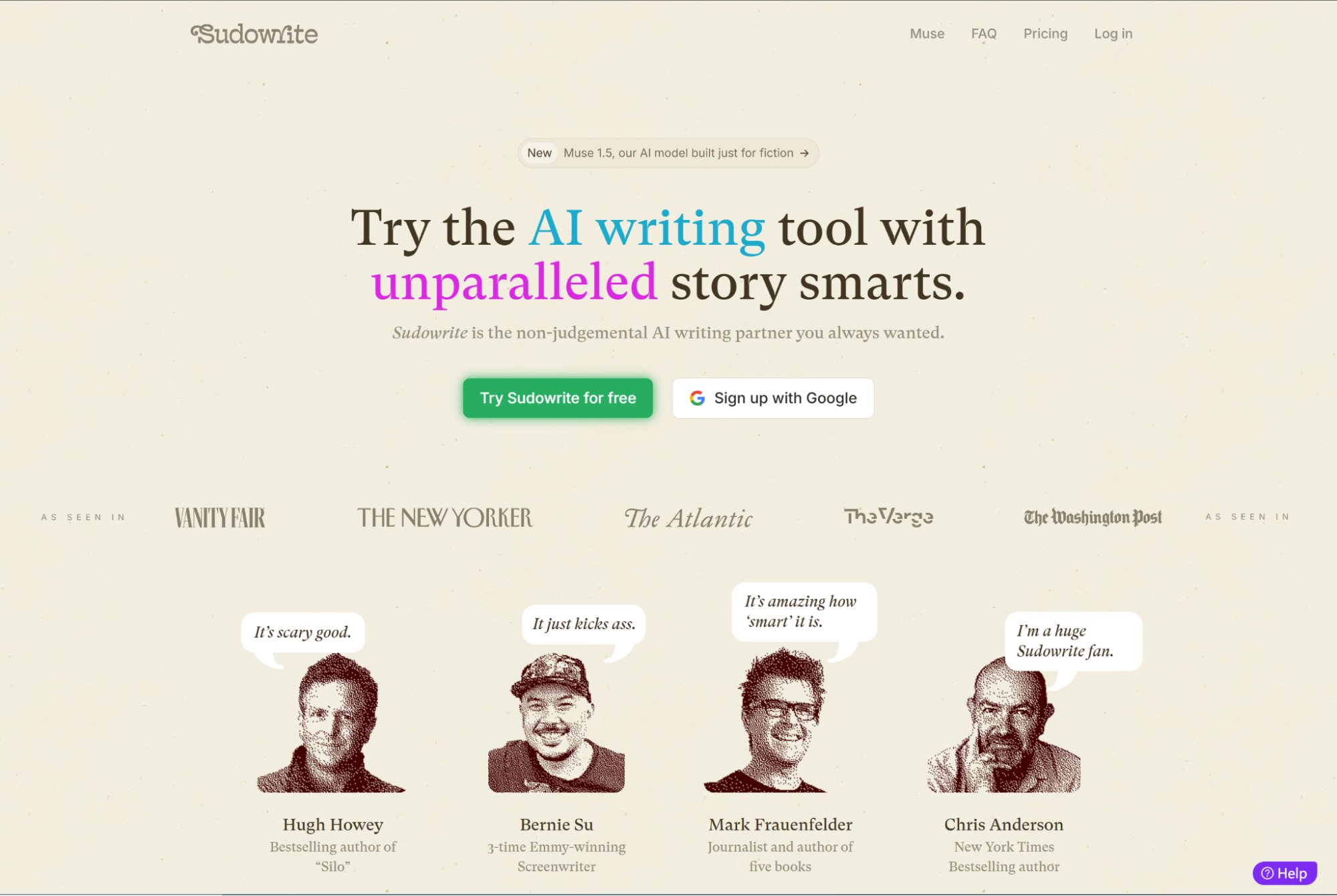
A scene reaches its turning point, but the room still feels flat. Sudowrite’s Write, Describe, and Rewrite tools can extend the passage, add sensory specificity, or recast a line; Story Bible helps retain relevant narrative context.
Its value lies in working directly with fiction already underway. A draft with the right emotional movement can gain atmosphere, action, imagery, or more precise language without abandoning the scene.
Pros
- Helps overcome writer’s block
- Strong scene-description support
- Useful for long-form story planning
Cons
- Output can feel generic or repetitive
- Long-form consistency still needs supervision
- May not fully preserve a unique writing voice
ChatGPT: Conversational Idea and Plot Explorer
A premise can be tested as a conversation rather than a blank-page exercise. ChatGPT responds to questions about plot turns, character motives, and genre possibilities, allowing an idea to be challenged, expanded, or redirected through dialogue.
That interaction is useful in early development, when writers may want to interview a character, stress-test a setup, or follow several promising story paths before choosing one.
Pros
- Flexible brainstorming and idea development
- Conversational story refinement
- Dialogue, scene, and tone rewriting
Cons
- Limited built-in long-form story organization
- Manual context and continuity management
- Output quality depends on prompt specificity
Novelcrafter: Customizable Long-Form Fiction Workspace

Novelcrafter approaches fiction generation as a configurable system. Its Codex, custom instructions, and support for multiple language models give writers control over reference material, prompting behavior, and the model setup behind a project.
That level of customization suits complex manuscripts with established rules, extensive world details, or a deliberately designed process. It is less a fixed drafting experience than a workspace that can be tuned around the writer’s methods.
Pros
- Designed for long-form fiction
- Flexible AI model support
- Greater author control
Cons
- More technical than simple AI writing tools
- Requires time to learn
- May be more than necessary for short projects
Google Gemini: Multimodal Inspiration for Story Development
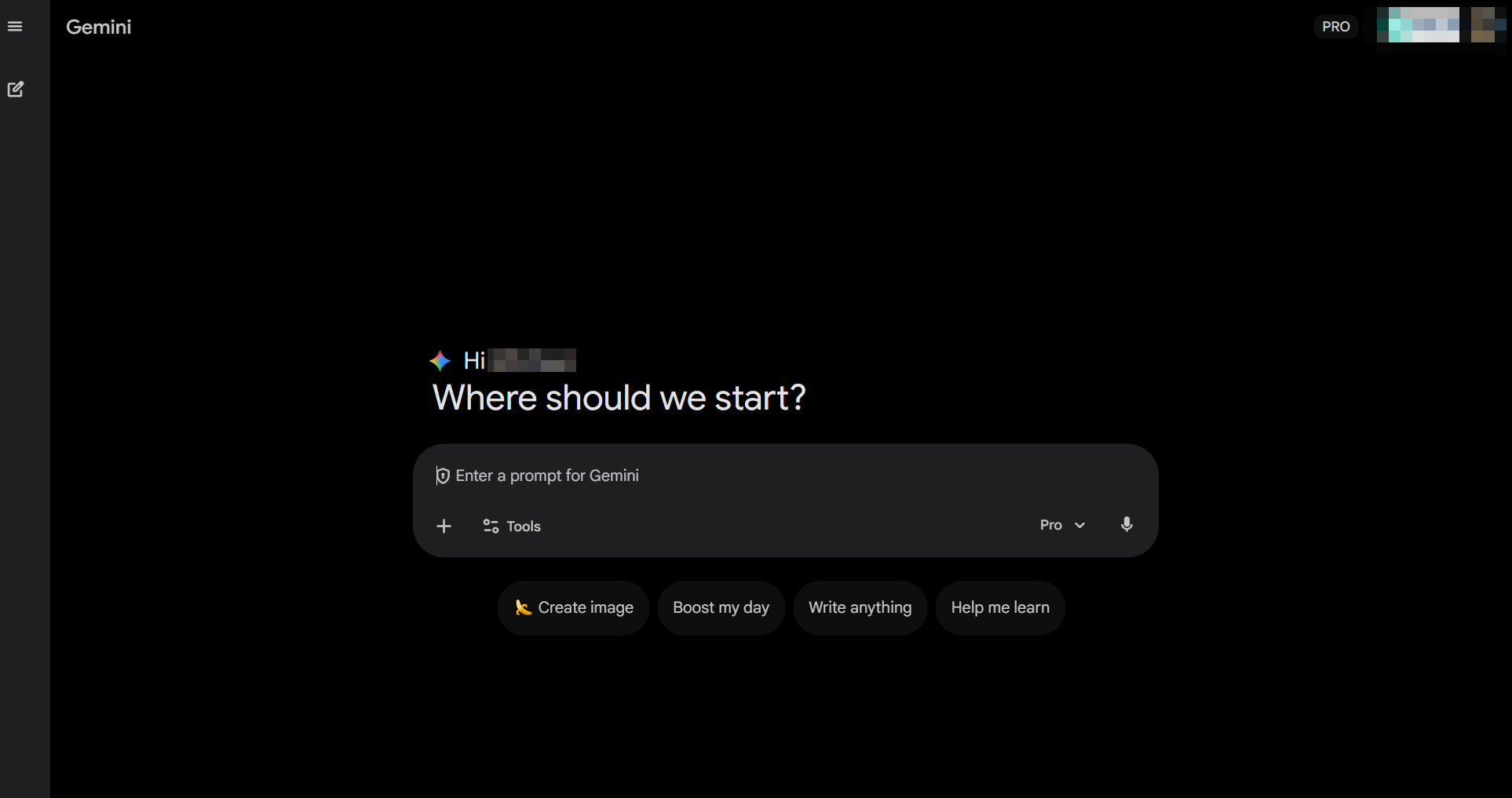
Gemini stands out for its native multimodal synthesis, allowing writers to blend visual references seamlessly into the creative process. Character concept art, wardrobe sketches, and visual mood boards can all serve as immediate inputs to inspire rich lore, aesthetic world-building, and evocative scene descriptions.
Alongside its multimodal strengths, Gemini excels at high-level creative brainstorming. It is particularly effective at the starting line of a story, helping writers pressure-test premises, architect complex character webs, construct world-building frameworks, and map out potential narrative arcs with ease.
Pros
- Multimodal inspiration with text and images
- Flexible story brainstorming and plot exploration
- Conversational creative refinement
Cons
- Risk of generic or predictable writing
- Limited long-form story management
- Need for human editing and quality control
ProWritingAid: Manuscript Analysis and Prose Editing
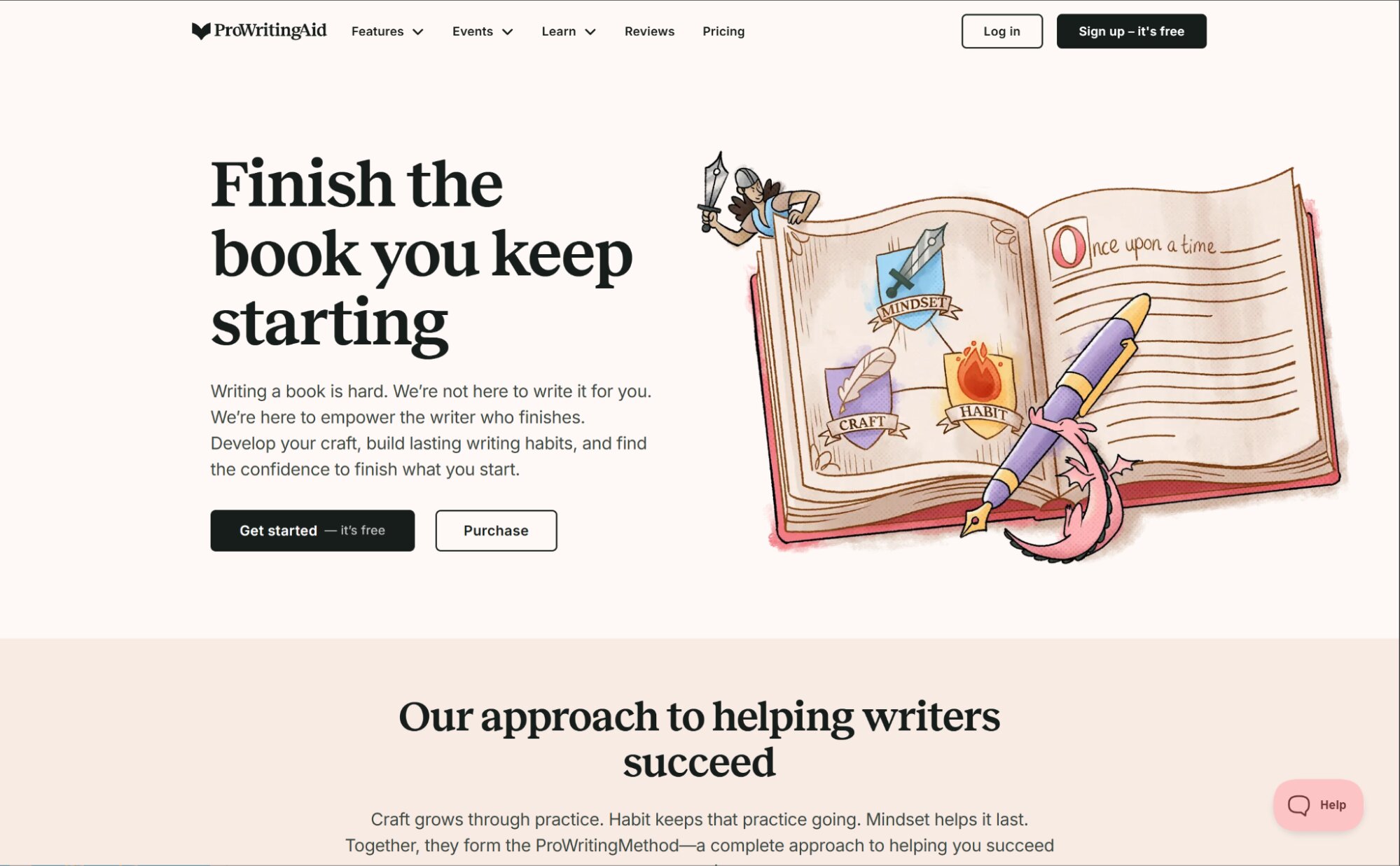
Where does a manuscript begin to drag, repeat itself, or lose clarity? ProWritingAid addresses those editorial questions through reports on style, readability, repetition, and related patterns, with manuscript critique available for broader feedback.
The tool is most relevant once enough text exists to diagnose recurring habits. Rather than supplying a story direction, it helps writers inspect a substantial draft and identify revisions worth making across it.
Pros
- In-Depth grammar and style analysis
- Chapter critique and manuscript-level feedback
- Useful integrations with word, google docs, and scrivener
Cons
- More focused on editing than story generation
- Suggestions may not always match a personal writing style
- Some advanced features require a paid plan
NovelAI: Narrative Style and Lorebook Experimentation

NovelAI invites stylistic trial: a passage can be pushed toward a more lyrical, spare, or genre-specific voice to see how the story changes. Its Lorebook keeps world information and recurring story details available alongside that experimentation.
Voice and setting often develop together in fiction. For projects whose atmosphere depends on both, the combination offers a way to explore prose character while maintaining a usable reference layer for the imagined world.
Pros
- Fiction-focused text generation
- Customizable prompts and generation settings
- Support for genre, character, and scene development
Cons
- Lorebook requires manual setup and management
- Generated prose may require significant editing
- Customization can feel technical for new users
Squibler: Outline-Led Manuscript Development
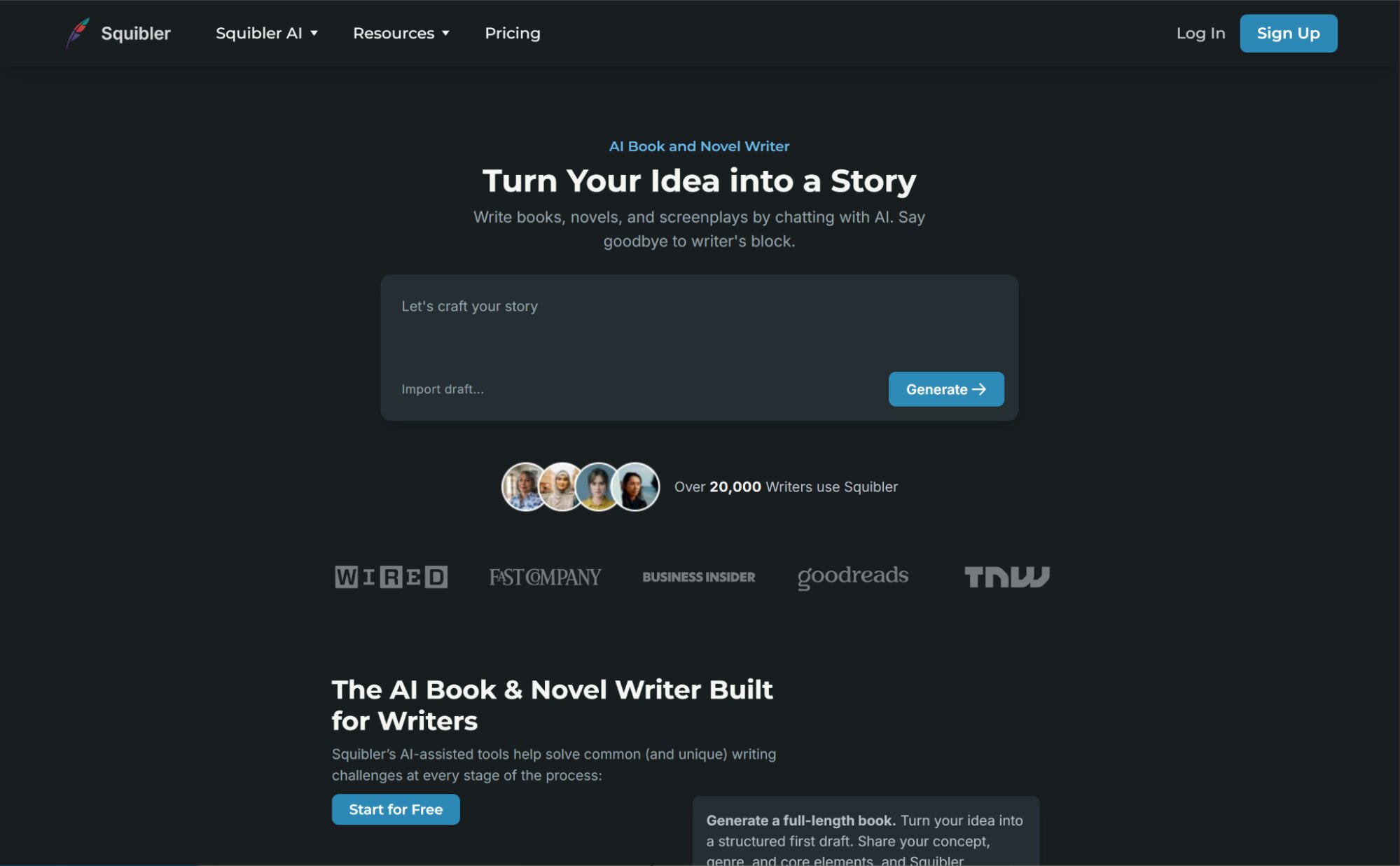
Squibler treats a long-form story as a production with stages, not a collection of disconnected pages. Its project workspace supports the movement from outline into manuscript, giving planning and drafting a shared structural frame.
An ordered outline can therefore remain visible as the work grows. This arrangement fits writers building a novel or other substantial narrative in sequence, with milestones and manuscript development organized within one project.
Pros
- Structured story planning and outlining
- Chapter and scene organization for long-form projects
- Centralized character, setting, and plot management
Cons
- May feel complex for first-time users
- Cannot replace personal voice or creative judgment
- Generated content can feel generic without clear input
Type AI: In-Document Draft Revision
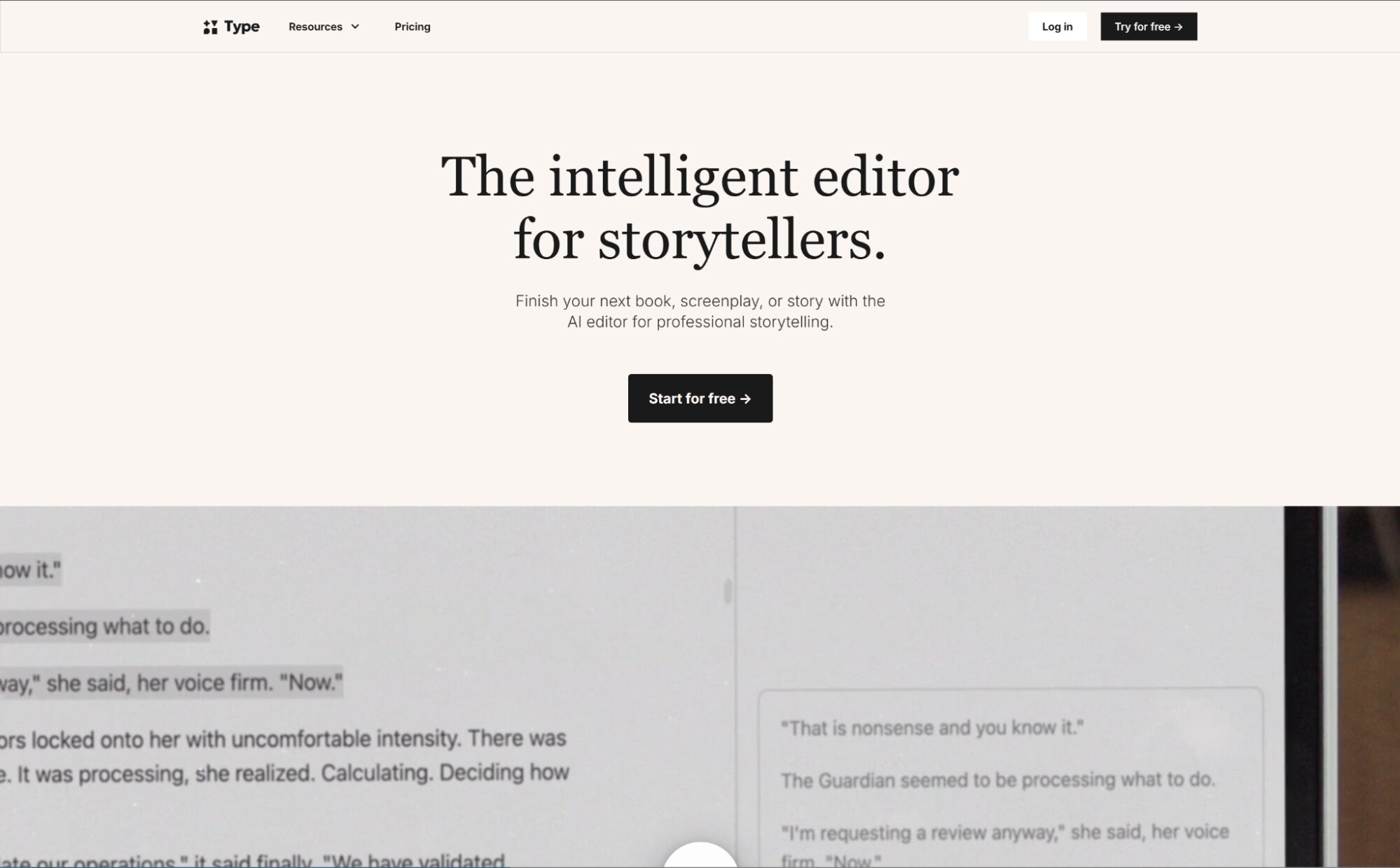
Inside an existing document, Type AI keeps editing close to the passage under revision. Its document-based tools and Notes support development, reshaping, and review without moving the writer into a separate ideation workspace.
That in-place approach is practical for a chapter, rough draft, or working notes file. Material can be reworked where it lives, while notes remain connected to the specific document being developed.
Pros
- Integrated AI writing and editing workspace
- Support for long-form fiction and screenplays
- Useful support for manuscript refinement
Cons
- May feel complex for casual or first-time writers
- Long manuscripts can require manual context management
- Advanced features may require a paid subscription
Rytr: Quick Short-Form Drafting and Rewriting
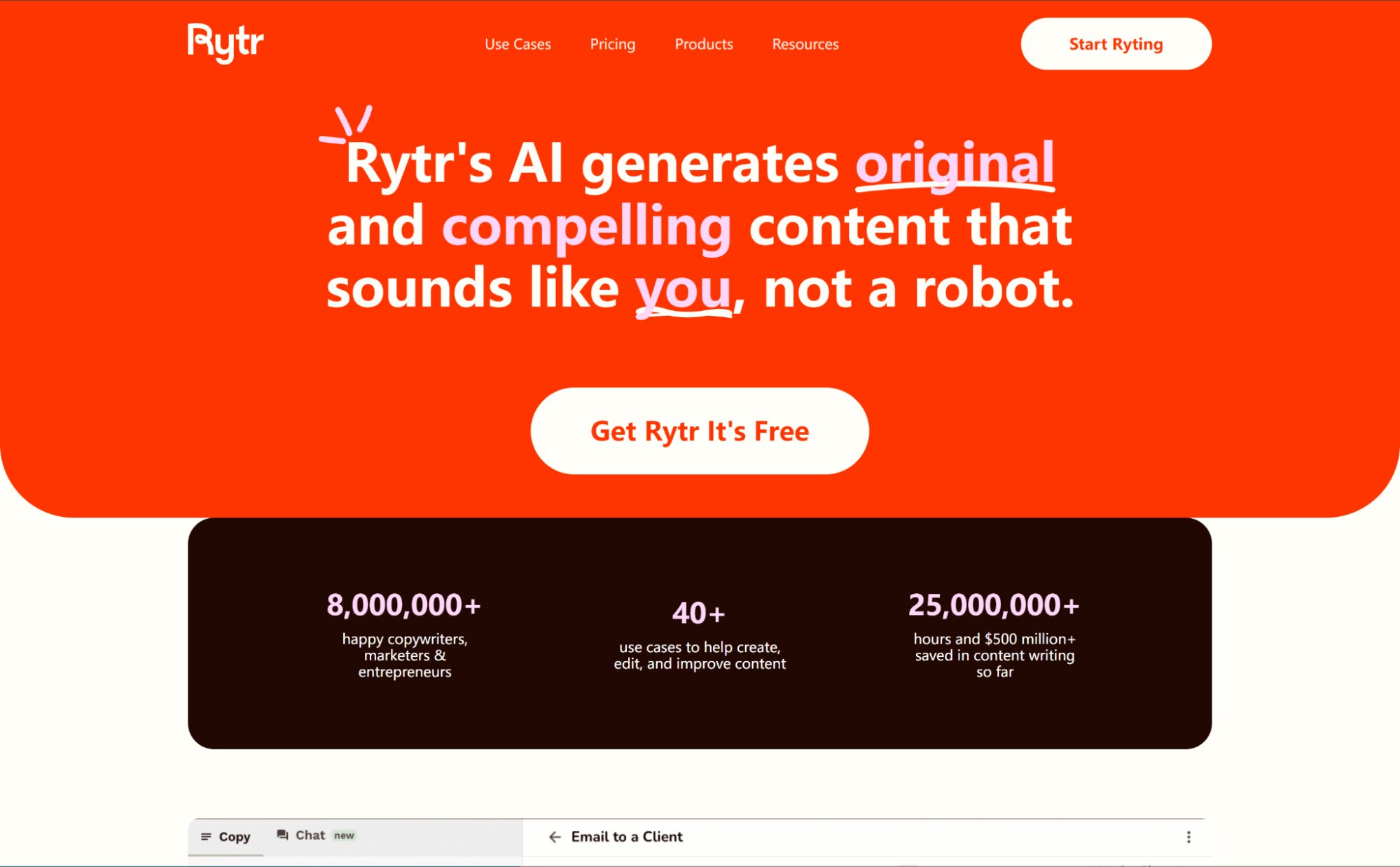
Rytr is built for quick turns on short text. Continuation, expansion, rephrasing, and tone-adjustment functions provide fast ways to produce a starting point or generate alternatives with little setup.
A brief opening, blurb, transition, or alternate line is a natural use case. It is geared toward compact drafting and revision tasks rather than the sustained management of a long manuscript.
Pros
- Fast idea generation and brainstorming support
- Simple text continuation and expansion tools
- Wide range of writing templates and use cases
Cons
- Less specialized for long-form fiction writing
- Limited support for story planning and worldbuilding
- Advanced features require a paid plan
Conclusion
We tested 10 Claude alternatives for creative writing, but finding the perfect fit comes down to your individual workflow and creative goals. Whether you rely on AI for early brainstorming, detailed outlining, drafting, or editing complex narratives, the ideal tool should enhance your creative flow without disrupting it.
Explore the tools that fit your writing style and give your imagination a stronger foundation. If you want a flexible, all-in-one writing companion, HIX AI is worth trying.
🤖 Best models · ⭐ Agentic workflows · ✍️ Works for any use case